
Earn to Die
Not DopplerRacing
4.86.67K Reviews
- Version
- 1.0.40
- Installs
- 1.00M
- Age Rating
- Teen
Screenshots
Our Review of Earn to Die
 Analysis by Appyee
My first useful habit in Earn to Die is to treat each drive as a test, not just a race to the finish. The rough vehicle makes it clear that progress comes from learning what stops a run and then choosing upgrades with a purpose. A failed attempt can still be useful: I can see whether the problem was losing momentum, struggling over an obstacle, or simply not having enough vehicle strength to keep moving. That turns the next trip into a small experiment rather than a repeat of the same mistake.
This is a zombie-apocalypse racing game from Not Doppler, and its central appeal is easy to understand: drive through danger, earn money, improve the car, and try to travel farther. The loop suits short sessions because a run has a clear goal, but the upgrades give me a reason to return when I have more time. It is a paid game, listed at $1.49, so I would approach it as a self-contained game purchase rather than expect a free-to-play experience.
A repeatable routine for better runs
When I want to make steady progress, I start by paying attention to where a run loses pace. It is tempting to spend every bit of cash on whichever upgrade sounds most exciting, especially when weapons promise more spectacular zombie-smashing. But a flashy purchase is not automatically the best answer to a specific obstacle. I get more from identifying the weak point first, then directing the next upgrade toward it. That simple habit makes the money earned during a run feel like a decision, not just a reward screen.
There is also a useful distinction between a run that looks dramatic and one that actually moves me forward. If I am repeatedly reaching the same stopping point, I try to notice whether I arrive there with too little momentum or whether the car is having trouble handling the terrain. That observation helps me judge upgrades on their practical effect. The game does not need a complicated planning system for this to work; remembering one concrete problem from the previous attempt is enough to give the next attempt a clearer purpose.
Controls and small choices that matter
The basic acceleration and tilt controls are approachable, but I would not dismiss the tilt input as an afterthought. It gives me a way to respond to the car’s position rather than holding acceleration and hoping every section goes well. I try to use it with intention when the vehicle is unsettled, then return my focus to forward progress. For a new player, the best approach is to get comfortable with the basic controls before worrying about squeezing every possible advantage out of a run.
Before a session, I would also check the control settings that are actually available on my device instead of assuming every player will prefer the same feel. I would not expect a menu full of elaborate options; the point is simply to make sure the controls feel manageable for my hands and screen. If I am playing in a brief break, I keep the goal modest: one or two focused runs, with a specific obstacle in mind. That is less frustrating than starting a session without knowing what I want to improve.
Why the upgrade loop works—and where it can drag
The satisfying part is not only reaching the end of a stage. It is seeing a vehicle that began as a struggling car become more capable through upgrades, then feeling the difference on the next drive. The money-and-improvement loop gives repeated attempts a reason to exist. I also like that the action has a readable objective: push through the hazards and get farther. Compared with a conventional circuit racer, this is less about clean laps, precise cornering, or competing for a polished racing line; it is about surviving a rough forward route and building a vehicle that can handle it.
That focus is also a limitation. Someone looking for realistic driving, a broad selection of competitive race formats, or a quiet driving simulator should look elsewhere. The zombie theme and repeated attempts are central to the experience, not a decorative layer that can be ignored. And although the upgrade loop encourages experimentation, it can feel repetitive if I want every attempt to introduce a completely different kind of challenge. The strongest reason to keep playing is the steady push to improve, so players who dislike retrying a route may not enjoy its rhythm.
Who will get the most from it?
I would recommend it to someone who enjoys arcade driving with a clear progression goal and does not mind learning through retries. It works particularly well when I have a little spare time and want an activity that has more direction than an endless score chase. For example, on a short commute break or while waiting for an appointment, I can make a run, remember the point where my car bogged down, and decide what to work toward next time. I do not need a long uninterrupted session to understand what the next attempt is for.
On the other hand, I would skip it if I mainly want multiplayer competition, realistic vehicle handling, or a game that constantly changes its rules and scenery. The Teen content rating is worth noting for anyone choosing games for a younger player, and the app’s minimum operating-system requirement is Android 4.4. Its average rating is 4.8 from around 107,000 ratings, with more than 1 million installs; those figures suggest a substantial audience, but they do not guarantee that its retry-and-upgrade pace will suit every player.
One practical question is whether the game is suited to quick play or longer sessions. In my view, it supports both, but for different reasons: short sessions work when I focus on one improvement, while longer ones make sense when I want to follow several attempts and upgrades in sequence. Another question is whether I need to understand racing games to start. I do not; the controls are simple to grasp, and the main learning curve comes from judging the car and its progress rather than mastering a complex racing simulation.
What to expect from its presentation
The bleak setting gives the driving a clear mood, and the zombies make the obstacles feel tied to the premise rather than like generic markers on a track. The original appeal is kinetic: moving forward, hitting trouble, and trying to make the next run stronger. I would not choose it primarily for a deep story or for a realistic depiction of a vehicle. Its presentation serves the arcade loop, keeping the focus on the road ahead and the next upgrade decision.
The sound and visuals contribute to that energetic tone, though my enjoyment depends more on whether I like the repeated drive-and-improve structure. A good way to judge that early is to ask whether the first few attempts make me curious about what a better-equipped car can do. If the answer is yes, the straightforward presentation supports the loop nicely. If I find myself wanting more variety in the moment-to-moment driving, attractive scenery or louder action will not solve that deeper mismatch.
How I would approach the upgrade choices
I would avoid treating the vehicle as a checklist where every available improvement deserves equal attention. Instead, I would choose one goal for the next run: travel farther, deal more effectively with the obstacle that keeps ending progress, or make the car feel more controlled. Then I would observe whether the change helped. This is a practical way to avoid spending without learning, especially when the game’s appeal is built around gradually turning a weak starting vehicle into a more capable one.
There is a trade-off between immediate spectacle and dependable progress. A weapon upgrade can make the zombie encounters more entertaining, while other improvements may better address the reason I keep falling short. I would not claim there is one universally correct build; the useful choice depends on what is happening in my own runs. Keeping that question narrow—“What stopped me last time?”—is more helpful than trying to optimize every part of the car at once.
It also helps to judge progress by more than whether I finish a stage on a particular attempt. If a run carries me farther, reveals a new difficulty, or helps me understand how the car responds, it has given me information for the next decision. That mindset reduces the feeling that a retry was wasted. For me, the game is most enjoyable when I treat each run as a short feedback loop: drive, notice, upgrade, and test again.
Getting Behind the Wheel
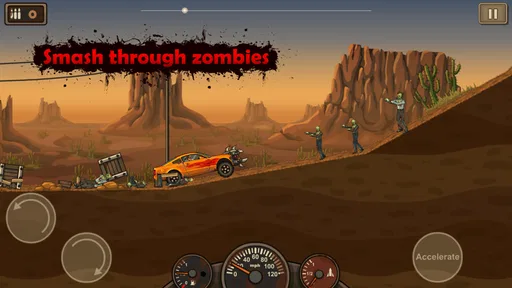
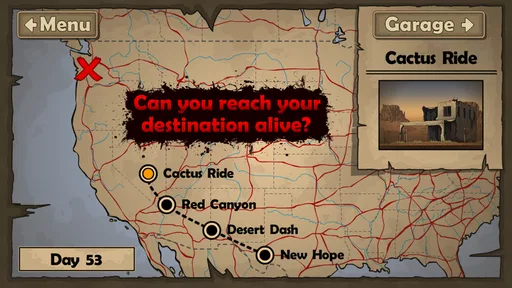
Jumping into Earn to Die feels like stepping into an action movie. The premise is simple but oh-so-addictive: you're stranded in the middle of a zombie-infested desert, and the only way out is by driving through hordes of the undead. Sounds easy, right? Well, not quite. Your journey begins with a rickety old car that’s barely holding together, and it's up to you to transform it into a zombie-smashing machine.
The Gameplay Mechanics
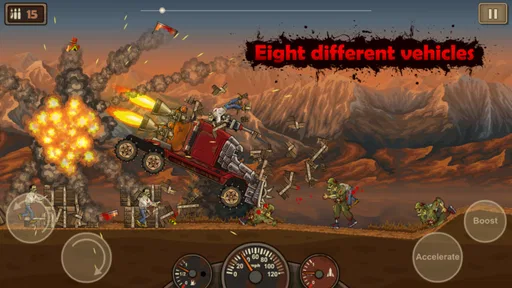
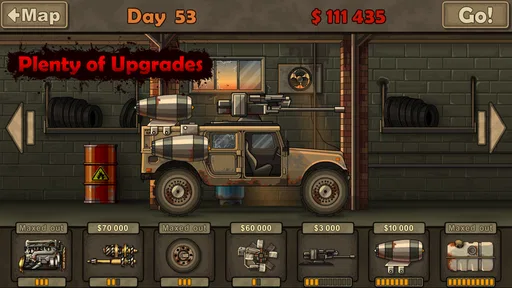
What really hooked me was the game's intuitive controls. You've got your basic acceleration and tilt controls, which are easy to grasp but challenging to master. The real charm, however, lies in the upgrades. As you progress, earning cash by mowing down zombies and completing levels, you can upgrade everything from your wheels to weapons. Trust me, nothing feels more satisfying than adding a machine gun to your ride and watching those zombies fly!
Visuals and Soundtrack
Visually, Earn to Die is no slouch. The graphics are vibrant and detailed, perfectly capturing the desolate landscape and the grotesque zombies. Each level is meticulously designed to offer new challenges and obstacles. And let’s not forget the soundtrack—it's a high-octane mix that amps up the excitement and keeps you on the edge of your seat.
Why You Should Play
Now, you might be wondering, "Why should I give this game a shot?" Well, if you’re a fan of fast-paced action with a side of strategic planning, this game is right up your alley. The satisfaction of upgrading your vehicle and plowing through zombies never gets old. Plus, the sense of achievement when you finally reach the end of a level is unbeatable.
Another point worth mentioning is the game's replayability. With multiple vehicles to unlock and various upgrades to experiment with, there's always a reason to dive back in and try a new strategy. Whether you're aiming for a faster time or just want to see how many zombies you can obliterate in one go, the possibilities are endless.
Final Thoughts
So, if you’re in the mood for some chaotic fun mixed with strategic depth, give Earn to Die a spin. It’s the perfect game to pick up for a quick adrenaline rush or to immerse yourself in for hours. Just be warned—you might find yourself glancing at your own car, wondering how it would fare in a zombie apocalypse!
Put the pedal to the metal and see how far you can get. Just remember, in this game, the only thing standing between you and freedom is a horde of zombies. Happy driving!
Verdict
Strengths of Earn to Die
- Intuitive controls for easy gameplay.
- Engaging progression with vehicle upgrades.
- Visually appealing graphics and animation.
- Challenging levels keep players motivated.
- Offers offline play for on-the-go fun.
Limitations of Earn to Die
- Repetitive gameplay may tire some players.
- Ads can occasionally interrupt gameplay.
- Limited storyline beyond basic premise.
- In-app purchases can be costly.
- Some levels feel excessively difficult.
Other Releases by Not Doppler
View All


Similar Picks in This Category
View All
Hill Climb Racing
Fingersoft4.3

Dr. Driving
SUD Inc.4.2

Traffic Rider
skgames4.5

Asphalt 8 - Car Racing Game
Gameloft SE4.6

Race Master 3D: Car Racing
Beresnev Games4.6

Extreme Car Driving Simulator
AxesInMotion Racing4.3
Frequently Asked Questions
What is the main objective of Earn to Die?
In Earn to Die, the primary objective is to navigate through a post-apocalyptic world filled with zombies. Players must upgrade their vehicles and drive through hordes of the undead to reach safety. The game emphasizes strategic resource management and vehicle enhancement to progress through increasingly difficult levels.
How does the vehicle upgrade system work in Earn to Die?
The vehicle upgrade system in Earn to Die allows players to improve various aspects of their vehicles, such as engines, tires, weapons, and armor. As players earn money by completing levels and destroying zombies, they can invest in these upgrades to enhance their vehicle's performance, making it easier to overcome obstacles and reach the next stage.
Are there any in-app purchases in Earn to Die?
Yes, Earn to Die includes in-app purchases. Players can buy additional in-game currency to quickly access upgrades and new vehicles. While these purchases can expedite progress, they are entirely optional, and players can still enjoy the full experience by earning currency through regular gameplay.
Is Earn to Die suitable for all ages?
Earn to Die is rated for a mature audience due to its depiction of zombie violence and destruction. While the graphics are cartoonish, the game involves running over zombies and can be intense. Parents should consider these elements when deciding if it is appropriate for younger players.
Can Earn to Die be played offline?
Yes, Earn to Die can be played offline, making it a convenient option for those without a constant internet connection. This feature allows players to enjoy the game on the go, without worrying about data usage or connectivity issues. However, some features may require an internet connection for updates or in-app purchases.
Play our best games!


